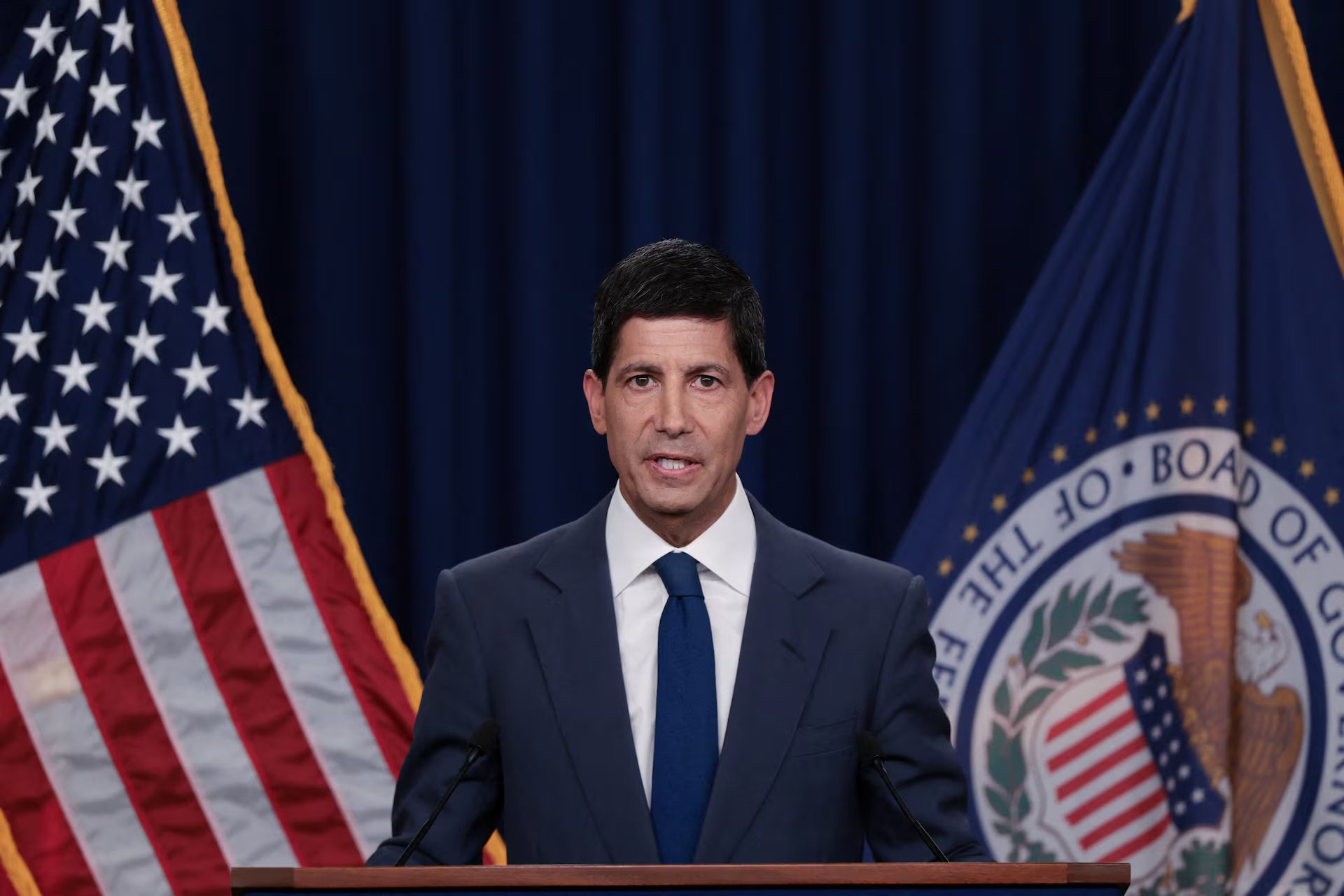
FED Chair Kevin Warsh delivered a hawkish message at Jackson Hole, presenting a stance on inflation that was significantly firmer than in the July meeting. However, he did not explicitly state or commit to whether the FED will actually raise interest rates in September.
Stance on Inflation and Financial Conditions
Kevin Warsh remains dissatisfied with the current inflation landscape, despite recent data coming in better than expected. He does not believe that one or two positive reports are sufficient to prove that underlying inflationary pressures have improved significantly.
He reaffirmed that the 2% PCE inflation target is “fixed and firm,” whereas actual PCE currently stands at 3.7% and CPI is at 3.4%. Notably, price pressures remain widespread, with 54% of PCE components recording inflation above 3% over the past 12 months.
According to Warsh, broad financial conditions are not yet truly tight, suggesting that current rates may not be high enough to return inflation to the 2% target. Consequently, if inflation does not continue to cool, the FED still has “work to do,” which could mean holding rates higher for longer or continuing to hike.
Shifts in Policy Forward Guidance and Policy Tools
Under previous FED Chairs, markets grew accustomed to receiving cues about upcoming plans through “forward guidance.” Kevin Warsh, however, wants the FED to speak less, act more cautiously, and avoid pre-committing to the trajectory of interest rates, preventing investors from basing every trading decision on officials' remarks.
He also refused to provide a specific “reaction function” - a framework that would indicate which exact conditions automatically trigger a rate change, such as hiking once inflation hits a specific threshold. Warsh argued that economic conditions are ever-changing and the FED's models are imperfect, meaning future rate decisions may become less predictable.
Furthermore, he emphasized that short-term interest rates remain the FED's primary tool, and that AI or balance sheet runoff are not reasons to alter policy. On the other hand, he noted that the broader economy is strengthening and expressed continued optimism regarding AI, business investment, and consumer spending.
Economic Context: US Consumer Spending Slows Down
Conversely, July personal spending data released by the US Department of Commerce showed a modest increase of 0.2% month-over-month. Down from 0.3% in June and slightly above market expectations of 0.1%.
This trend reflects American consumers tightening their belts amid prolonged high interest rates and persistent inflation. Since personal consumption accounts for roughly 70% of US GDP, this deceleration serves as a key signal that the world's largest economy is gradually cooling.
This development could factor into the FED’s September decision: if consumer spending weakens, the pressure to raise interest rates may ease, providing a positive catalyst for equities and oil markets.
Market Reaction and Expectations
Following the FED Chair's remarks, the bond market reacted promptly, interpreting the speech as a sign of higher odds for continued rate hikes. Yields on two-year US Treasury notes - a benchmark especially sensitive to FED policy expectations - surged.
While a September rate hike remains unconfirmed, it has now become a high-probability scenario that market participants must factor in. CME data indicates that markets are pricing in a nearly 60% chance of a rate hike in September, while prediction markets such as Polymarket and Kalshi show odds just above 50%, still leaning slightly toward further monetary tightening.